Wait, I'm Breathing Wrong?!
The uncomfortable truth hiding under everyone's nose — literally.
Let's start with a truth bomb: most athletes breathe wrong — not occasionally, but habitually, consistently, and with measurable consequences for performance. Research from Ritsumeikan University found that 91% of athletes in organized sport settings displayed dysfunctional breathing patterns, with the majority defaulting to upper-chest, shallow breathing.
Athletes with dysfunctional breathing
Ritsumeikan University
And before you think 'I have been breathing my whole life — surely I am fine' — consider this: you have also been walking your whole life, but your coach still spent weeks correcting your run technique for tumbling. Breathing is a skill. Doing it wrong for years builds habits that cost you most when it matters most: on the competition floor.
The Physiological Paradox of Modern Cheersport
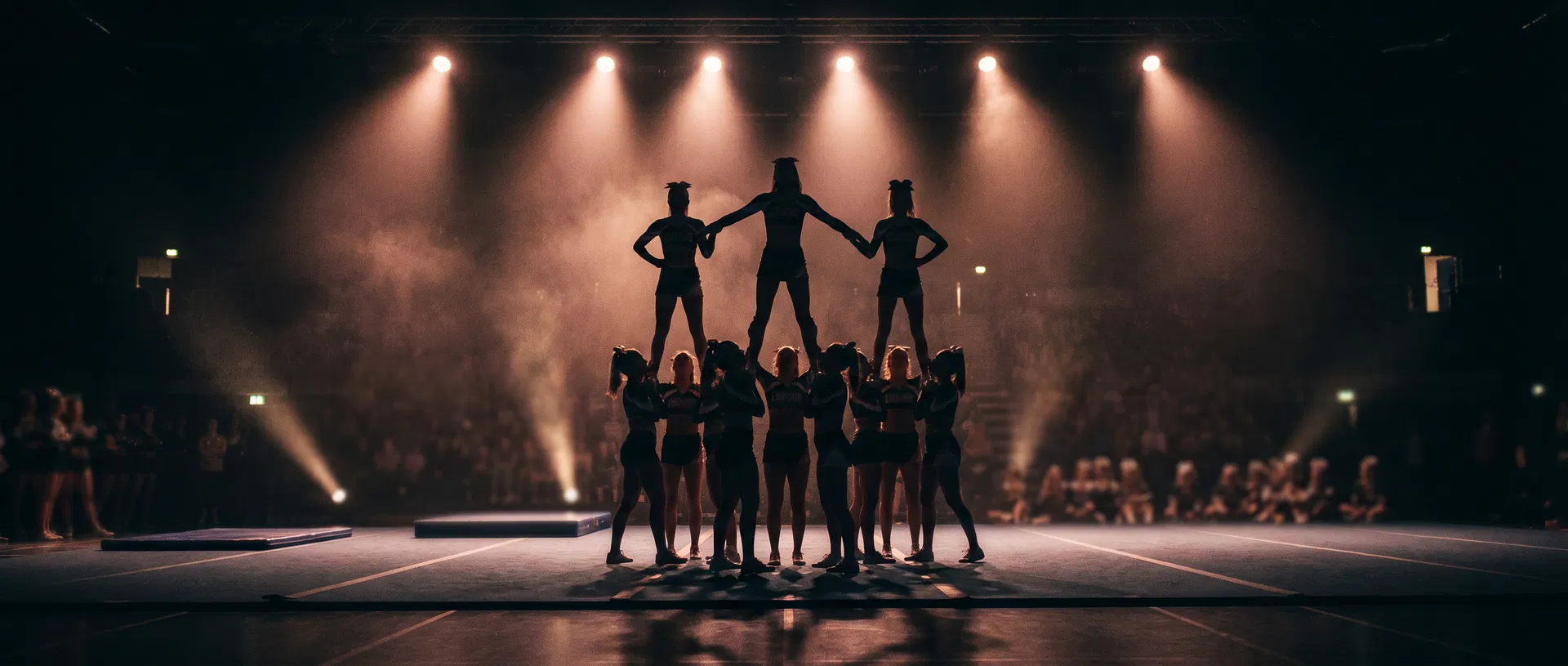
Competitive cheerleading has undergone a radical transformation from a sideline support activity to a high-performance athletic discipline that rivals elite gymnastics. The modern competitive routine is a 2-minute and 30-second high-intensity interval event that presents a unique and punishing physiological paradox: athletes must execute maximal-effort anaerobic power movements — such as explosive tumbling passes and heavy stunting — while simultaneously maintaining the high-volume vocal projection and aesthetic composure required by the score sheet.
This dual demand places exceptional, often conflicting, stress on the respiratory system, which must serve two competing masters: the metabolic need for massive gas exchange to clear lactate and oxygenate hypoxic muscles, and the biomechanical need to create intra-abdominal pressure (IAP) for spinal stability during high-impact loading.
Time at >90% max heart rate during routine
University of Tampa / German Sport University Cologne, 2025
Post-routine blood lactate
IJSPP, 2025
What Actually Happens When You Breathe Wrong
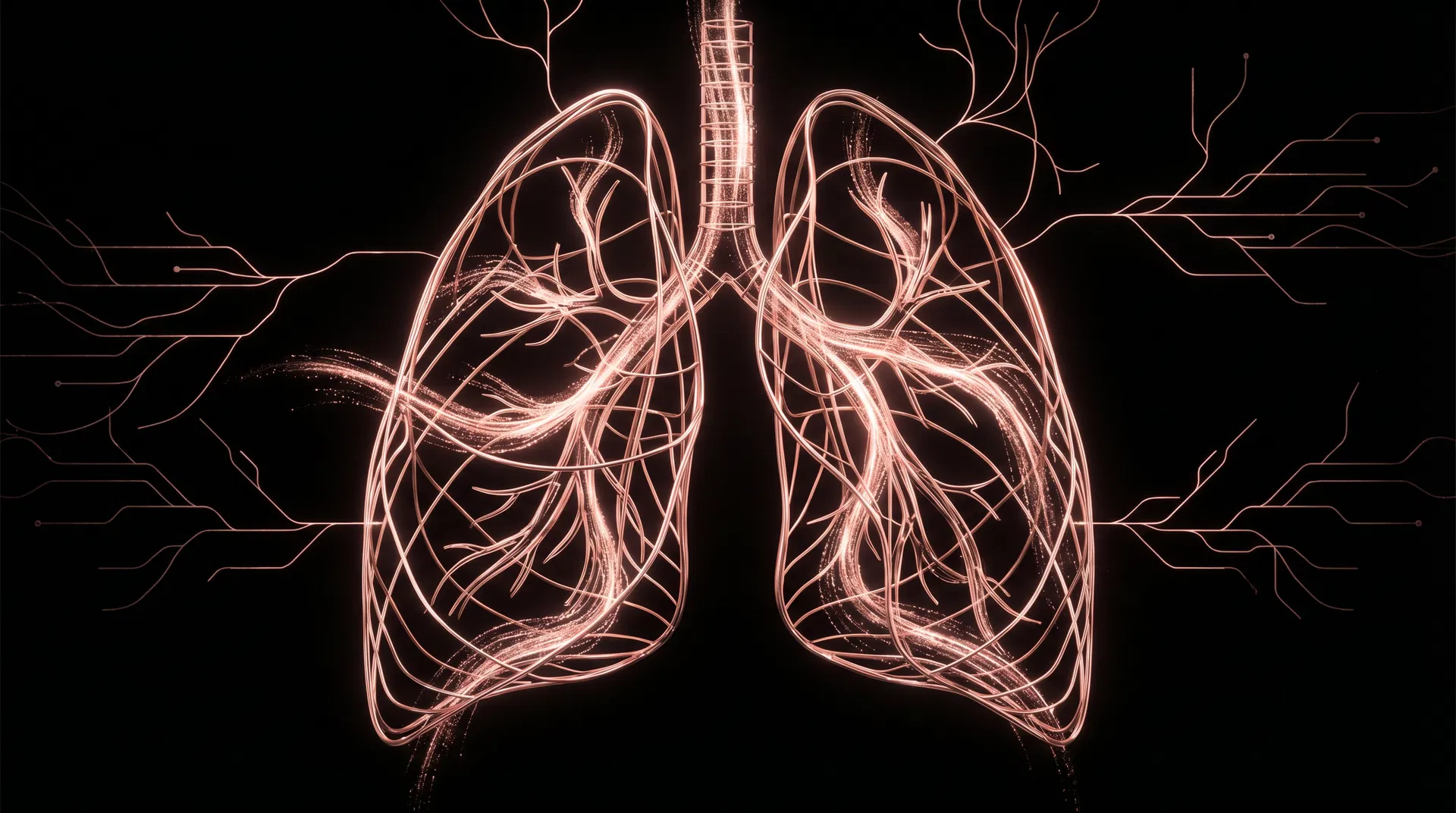
When your body comes under pressure — heart rate climbing, crowd noise rising — your breathing does one very predictable thing: it moves upward. Instead of your belly expanding, your chest and shoulders rise and fall in short, rapid cycles. Chest breathing uses only the top third of your lung capacity and triggers a direct, measurable stress response.
A landmark study published in Hypertension (Narkiewicz et al.) measured sympathetic nerve activity across participants with different resting breathing rates. Those breathing faster — averaging 18 breaths per minute — had 29 more sympathetic nerve bursts per minute than slower breathers. Faster, shallower breathing does not just reflect anxiety. It creates it.
The consequences of chest breathing under competition pressure:
Oxygen delivery drops — muscles get less fuel exactly when they need more
Anxiety spikes physiologically, not just psychologically
Endurance tanks — you fatigue faster in the final 30–60 seconds of your routine
Mental focus scatters — oxygen-deprived brains cannot execute precision skills
Team synchronization suffers — if you cannot control your breath, you cannot control your timing